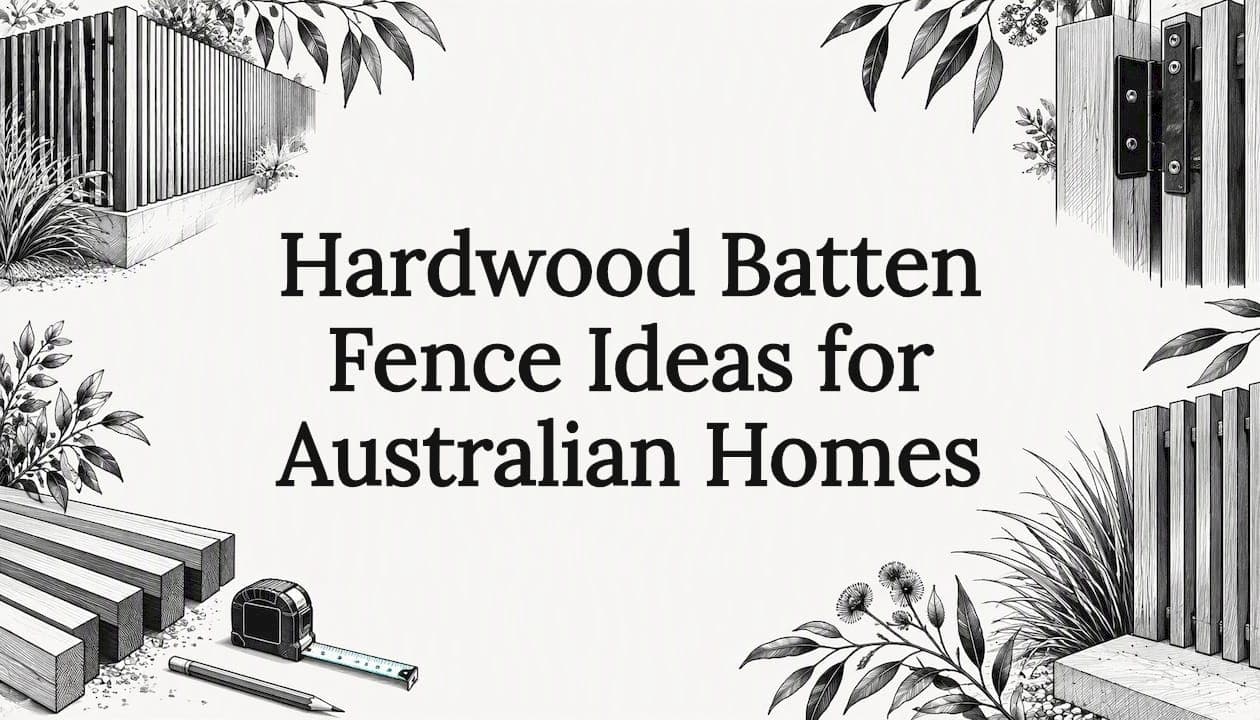
The best hardwood batten fences pair a durable Class 1 or 2 species with a clear design decision: vertical or horizontal, tight or open, natural or lightly pigmented. Then they get the detail right: spacing, fixing, finish and, near a pool, compliance. This guide walks through the ideas that suit contemporary Australian homes, the timbers worth specifying, and the rules that can change your design before you build.
TL;DR
- Choose a Class 1 or 2 hardwood such as spotted gum, blackbutt, ironbark or jarrah. Timber species are rated for durability, and fencing should ideally sit in those top two classes.
- Vertical battens read as formal and tall. Horizontal battens read as wide and modern, but need stiffer boards and closer posts.
- Spacing sets privacy, airflow and shadow. Decide it from the street and neighbor sight lines, not from a catalog photo.
- Seal end grain and finish the timber right after installation. Light colors cope better with heat than dark ones.
- Near a pool, the barrier rules in Victoria can override the look. Check them before you finalize the design.
Table of Contents
- Hardwood batten fence designs that suit contemporary Australian homes
- Vertical or horizontal battens: how the direction changes the look
- Choosing the hardwood: species that last
- Batten spacing: privacy, airflow and visual effect
- Rules that can change your design: height, pools and permits
- Finishes and maintenance for Australian weather
- Our perspective
- Plan your batten fence with Gatecon
- FAQ
- Sources
Hardwood batten fence designs that suit contemporary Australian homes
Batten screening is a staple of Australian architecture for a reason: it gives privacy without turning a boundary into a solid wall. The same logic works at fence scale.
Here are the design ideas we see working best.
The layered, breathable screen
The Local Project's feature on Noosa Heads House describes a lightly colored timber-batten screen that encases the home, giving privacy while keeping a sense of openness and letting breezes through. At fence height, the idea translates into a front or side boundary with gaps that let air move and light filter, rather than a hard visual stop.

The folding corner
The Australian Institute of Architects' award entry for Somerville Residences describes timber battens that fold to address a corner and give the entry a clear identity. For a home on a corner block, bending the batten line around the turn is a simple way to make the fence feel designed instead of merely installed. Corner sites carry their own visibility rules, so read our guide to corner block front fence rules first.
Natural timber for shade and privacy
The Institute's 2025 entry for Lavarack House describes natural timber screening providing privacy and shade in a climate-responsive home. A batten fence beside a courtyard, a side passage or an outdoor dining area does the same job on a smaller scale.
The gate as part of the fence
The strongest batten fences do not stop at the gate. Running the same batten profile and spacing across a pedestrian gate, or a sliding or swing driveway gate, makes the entry look like one composition. Automation and access control can sit behind the batten line so there is no bulky hardware on show. We cover how this fits the wider front fence picture in our modern front fence ideas.

Mixing materials
Hardwood battens pair well with a masonry base, a powder-coated steel frame or a render pier. Timber brings warmth while the other materials bring structure and crisp lines. This is a common approach for boutique residential and high-end commercial projects, where the fence needs to echo the building's palette.

Vertical or horizontal battens: how the direction changes the look
Direction is the first big decision, and it changes both the appearance and the engineering.
Vertical battens emphasize height and rhythm. They suit narrow frontages, formal facades and streetscapes where the fence should look slim. Dezeen's report on Tinbeerwah House describes slender eucalyptus battens forming sliding hardwood screens that control light, breezes, privacy and views, a useful reminder that the batten itself can be very fine when the spacing is well judged. Vertical battens also shed water cleanly, which suits exposed boundaries.
Horizontal battens emphasize width and calm. They make a short frontage feel broader and sit comfortably with low, modern architecture. They also create strong shadow lines in low sun. One Queensland project, Bangalow Road House, uses horizontal battens on the upper level to block street-level sight lines while keeping outward views.
The trade-off is structural. The Spruce notes that horizontal fences can cost more to build because they generally need higher-grade boards to prevent sagging and often more frequent posts. That is a US source, but the physics apply to long spans of any timber. In our experience, a horizontal batten fence is best designed with the post spacing worked out first, then the batten length, rather than the other way around.
| Factor | Vertical battens | Horizontal battens |
|---|---|---|
| Visual effect | Taller, formal, rhythmic | Wider, calm, contemporary |
| Structure | Rails carry the load, simple fixing | Needs stiffer boards and closer posts |
| Water shedding | Sheds water well | Water can sit on top edges |
| Pool compliance | Rails can be placed on the outer side of the barrier | Horizontal members can create footholds |
| Best for | Narrow frontages, formal homes | Wide frontages, low-slung modern homes |
On pool fences in particular, horizontal members need care because they can act as footholds. More on that below. For a lower-cost take on vertical timber, see our vertical slat fence choices.
Choosing the hardwood: species that last
Hardwood is only as good as its durability class. WoodSolutions explains that timber species are rated in four durability classes for in-ground use and four for above-ground use, and that fencing timber should ideally be Class 1 or 2. Its Australian hardwoods seminar material repeats the point: only Class 1 and Class 2 timbers should be used externally.
WoodSolutions' decking guide lists the Class 1 above-ground species as Spotted Gum, Blackbutt, red and grey Ironbark, Tallowwood, and Merbau/Kwila. Here is how those and one more popular choice behave in design terms.
- Spotted gum: a warm, varied color with a subtle figure. A natural fit for modern homes and a favorite for fine batten profiles.
- Blackbutt: a lighter, honey-toned timber that suits coastal and contemporary palettes.
- Ironbark: very dense and dark. It suits heavy, sculptural screens and bold streetscapes.
- Tallowwood: another Class 1 option, often chosen for its durability.
- Merbau/Kwila: a rich reddish brown that suits formal, traditional or resort-style looks.
- Jarrah: WoodSolutions identifies jarrah as a hardwood suitable for fencing and outdoor use because of its resistance to weather, rot, termites and marine borers, and its deep red-to-blonde range supports a premium natural look.
A practical rule: pick the species for the color you want to see in five years, not just on day one. Hardwoods weather and change tone, and your finish choice decides whether they stay warm or silver off.
Profiles and sizes
The 40 x 40 mm square or softly rounded batten is the profile most often shown in Australian examples, and it suits both vertical and horizontal layouts. Thinner profiles give a refined, light look but are less forgiving over longer spans. Deeper battens, set on edge, cast stronger shadow lines and add stiffness. We tailor the profile to the span, the rail layout and the architecture of the house, rather than treating one size as universal.
Batten spacing: privacy, airflow and visual effect
Spacing is where a batten fence becomes either elegant or awkward. We do not rely on a single published figure here, because the right gap depends on the batten width, the height of the fence and who you want to screen out. What we do is work from three questions.
- How much privacy do you need, and from where? A fence viewed straight on can look quite open, yet block sight lines almost completely when viewed from an angle. Standing at the street and at the neighbor's window with a sample panel tells you more than any drawing.
- How much air and light do you want? Narrow gaps give near-solid privacy with a slim sliver of light. Wider gaps feel airy and let breezes move, as in the layered screens described in the Noosa Heads example above.
- What rhythm do you want? A gap equal to the batten width reads as a regular, graphic pattern. A gap much narrower than the batten reads as nearly solid with fine shadow lines. A gap wider than the batten reads as a screen.
Two further points. First, timber moves. WoodSolutions notes that expansion and contraction with moisture changes is a natural characteristic of timber and that minor movement should be expected even in durable species. Build a little tolerance into the spacing so the pattern still looks deliberate after a few seasons. Second, if the fence is a pool barrier, the spacing is no longer a design choice alone, as the next section explains.
If privacy within a height limit is your main aim, our guide to keeping privacy within 1 m shows how spacing and layering can do the work.
Rules that can change your design: height, pools and permits
Before you fall in love with a design, check the rules. Owners must check local council requirements for permits, especially around height, materials and non-climbable zones. Our guide to front fence height in Victoria covers the 1.5 m and 2.0 m question for street frontages. Councils also publish their own requirements: Maroondah City Council's building permit page, for example, says timber-framed work must meet AS 1684 material sizes and grades, with evidence of compliance, and plans must state the method of termite protection.
Batten fences around pools
Pool barriers are the area where a good-looking batten design most often needs to change. Mornington Peninsula Shire's fact sheet explains that in Victoria, pool barriers must comply with AS 1926.1-2012, be at least 1.2 m high, and have no projections or indentations greater than 10 mm within the non-climbable zone. Where a boundary fence serves as the barrier, the same fact sheet says it must be at least 1.8 m high with a 0.9 m non-climbable zone at the top on the pool side.
What this means for battens:
- Horizontal battens on the pool side can create footholds. Put rails and horizontal members on the outer side, or use a vertical layout inside the pool area.
- Gaps and fixings within the non-climbable zone must stay within the limits. Fine details such as batten edges and screw heads matter.
- A design that works for the street frontage might need a different treatment on the pool side. Many projects use a continuous look from the street and a compliant detail inside.
The approval route and the final inspection rest with your council and a registered building surveyor, so confirm your design with them before fabrication. We unpack the trade-offs in our article on batten fence designs and pool rules. Properties in fire-prone areas face another layer, covered in our guide to bushfire resistant fencing materials.
Finishes and maintenance for Australian weather
Species alone does not make a fence last. WoodSolutions' view is that external hardwood performance depends on durability class, moisture management, sound fixing and ongoing maintenance, not species selection alone.
Finish early. Applying a protective finish immediately after installation helps reduce moisture uptake and movement and prevent fungal attack and decay.
Go light. WoodSolutions' service life guidance recommends light-colored acrylic paints or pigmented oil-based stains to reflect heat and minimize distortion. Dark coatings absorb more heat, which raises the risk of distortion, checking and faster decay. If you want a dark fence, discuss the batten species, thickness and a heat-reflective coating with us first, rather than assuming any black stain will behave.
Seal the end grain and joints. The same guidance stresses sealing end grain and joints during installation, then keeping the fence clean and re-applying the finish as the manufacturer recommends. In practice, we cut and seal every batten end before it goes on the rail, because cut ends are where moisture enters.

Keep the whole entry in good order. A batten fence rarely stands alone: gates, locks and access hardware age at their own pace. Good habits for urban property security apply to the entry as well, with regular checks of hardware, fixings and finishes.
Coastal sites. Salt air is harder on fixings than on Class 1 hardwood. Specify corrosion-resistant fasteners and brackets, and plan a more frequent wash-down and finish schedule for bayside properties.
If you are weighing timber against a lower-maintenance alternative, our comparison of composite and timber fencing costs over 15 to 25 years sets out the long view.
Our perspective
We design batten fences the way an architect would approach a facade: start with the building, then decide what the fence needs to do.
The most common mistake we see is choosing the timber and the pattern first, then discovering the post spacing, the pool rules or the gate do not fit. We work the other way around. Structure, compliance and the entry come first, and the batten profile and spacing follow.
Our approach is bespoke. We tailor the species, the profile and the finish to each home, and we integrate automation and access control so the gate disappears into the batten line, with security and elegance and no bulky hardware on show.
A fence at this level is a statement about the home. It should look as though it was always part of the architecture.
Rhys
Plan your batten fence with Gatecon
Gatecon designs, fabricates and installs luxury driveway gates and architectural fencing across Melbourne, for homeowners, boutique builders, developers and architects. If you want a hardwood batten fence matched to your home, our Designer Fencing service is the place to start. For a matching driveway or pedestrian entry, see our Architectural Gates.
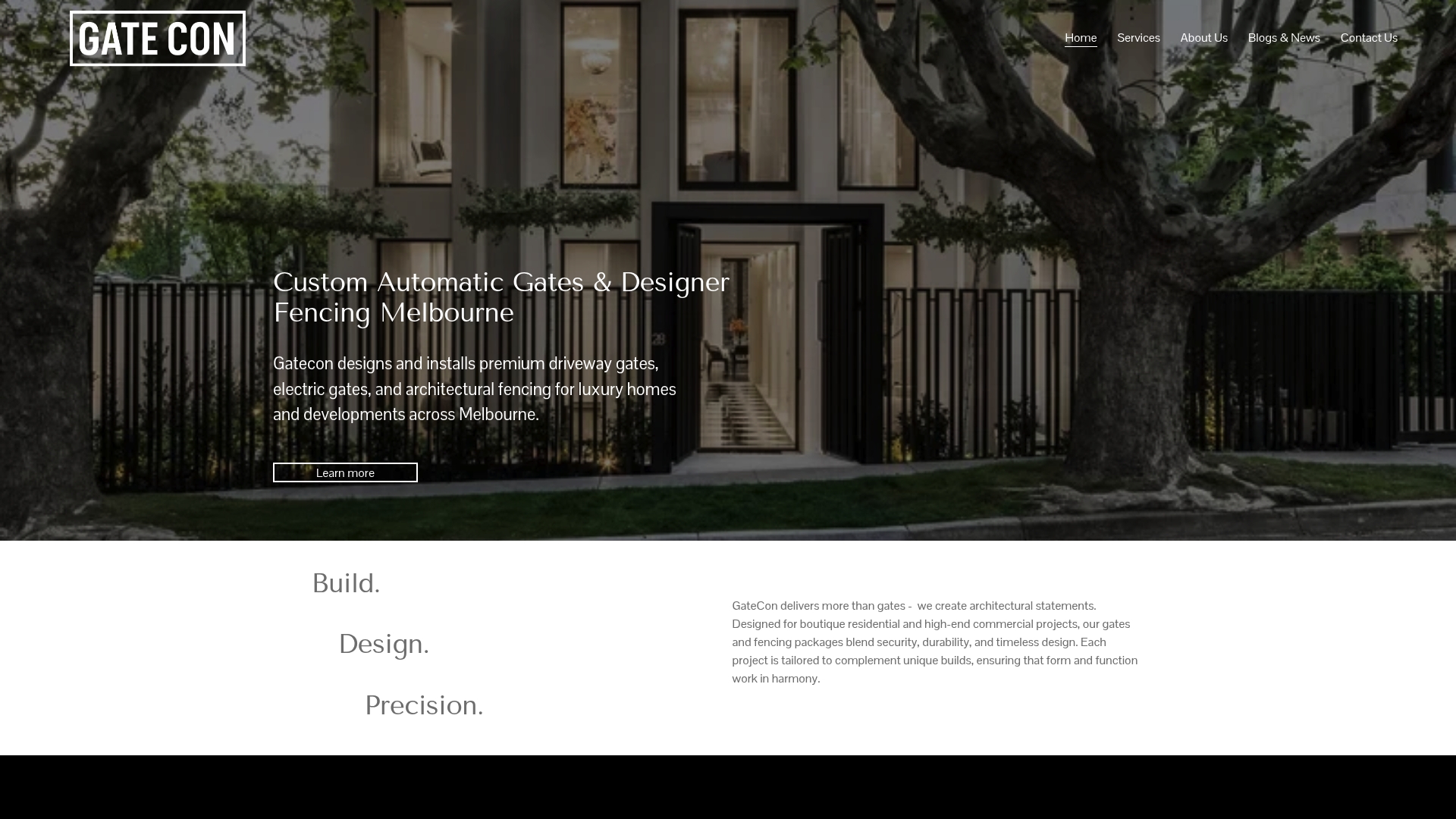
Tell us the site, the architecture and what you want the fence to do, and we will propose a design that handles the structure, finish and entry together. We work across the inner suburbs, Bayside, the Eastern Suburbs and beyond, as listed on our Melbourne service areas page. Our published offers carry no listed prices because each project is custom.
FAQ
Which hardwood is best for a batten fence?
There is no single best species, but the top choices are Class 1 or 2 timbers. WoodSolutions lists spotted gum, blackbutt, ironbark, tallowwood and merbau as Class 1 above ground, and describes jarrah as suitable for fencing. Choose by the color and weathering you want, then by the fence's exposure.
Are horizontal batten fences harder to build than vertical ones?
Generally, yes. Horizontal designs usually need higher-grade boards to resist sagging and closer posts, which adds cost and detailing. They also need extra care on pool barriers, where horizontal members can create footholds.
Can I use a batten fence as a pool barrier in Victoria?
It can work if it meets the rules. Victorian pool barriers must comply with AS 1926.1-2012, be at least 1.2 m high, and keep the non-climbable zone free of projections or indentations over 10 mm. Confirm your design with your council or building surveyor before building.
How should I finish a hardwood batten fence?
Finish it straight after installation with a light-colored acrylic paint or pigmented oil-based stain, and seal the end grain and joints. Re-apply the finish as the manufacturer recommends, and expect minor timber movement over the seasons.
Do I need a permit for a batten fence?
Often you need to check, because height, materials and location can all trigger council requirements. Contact your local council before you commit to a design, especially on a corner block, a street frontage or a pool boundary.
Sources
- Somerville Residences, Hartree+Associates Architects
- Lavarack House, BDA Architecture
- Noosa Heads House by Vokes and Peters, The Local Project
- Sliding eucalyptus screens wrap house, Dezeen
- Bangalow Road House, Jidipi
- Horizontal vs. Vertical Wooden Fences, The Spruce
- Fencing, WoodSolutions
- Close to ground timber decks, WoodSolutions
- Jarrah, WoodSolutions
- Timber service life design, WoodSolutions
- Australian hardwoods for external use, WoodSolutions
- Pool Barrier Safety Requirements, Mornington Peninsula Shire
- Building Permit Application, Maroondah City Council
- Door security best practices for urban properties