The best privacy front fence pairs a legal-height base, usually around legal height limits (commonly near one meter) at the boundary line, with angled or louvered slats above it, or a low solid section backed by dense planting. Either approach blocks eye-level sightlines from the street while keeping the house from disappearing behind a wall. This guide covers the styles, materials, techniques, and permit checks that make it work, plus when a bespoke installer like Gatecon earns its keep on a complex or high-visibility property.
TL;DR:
- Using angled or louvered slats at the legal height limit effectively blocks street view while maintaining airflow and light.
- Timber fences are the most affordable initially but require re-staining every two to three years and typically last 15 to 20 years depending on climate conditions.
- Incorporating planting, lattice toppers, or changing slat direction helps increase privacy without exceeding council height limits or blocking natural light.
- For complex sites like slopes or corner properties, bespoke installation from a specialist offers better integration of automation and design than off-the-shelf options.
- Always verify local council rules and permits before building to avoid costly rework or legal disputes over height, setbacks, or boundary overlaps.
Table of Contents
- Privacy Front Fence Styles That Still Look Good From the Street
- Materials: Pros, Cons, Longevity and Maintenance
- How to Get Real Privacy When Front-Yard Height Is Limited
- Typical Costs and Realistic Maintenance Expectations
- Pre-Build Checklist: Permits, Property Lines and Utilities
- Techniques for Enhancing Privacy Without Blocking Natural Light
- How Fence Design Shapes Neighborhood Aesthetics and Neighbor Relations
- Security Considerations Related to Privacy Fencing
- Environmental Considerations and Sustainability of Privacy Fence Materials
- Designer Perspective: Balancing Privacy, Welcome and Resale
- Gatecon: Bespoke Front Fences Built to Match Your Home, Not a Catalog
- Key Building Authorities and Practical Resources to Check
- Sources
- FAQ
Privacy Front Fence Styles That Still Look Good From the Street
Most councils cap front-yard fences around one meter for solid sections, so the design work happens above that line, not below it. The trick is choosing a pattern that reads as intentional rather than defensive.
Horizontal slat fences suit modern and mid-century homes particularly well. The long, flat lines echo contemporary cladding and window proportions, and they tend to make a narrow frontage look wider rather than boxed in.
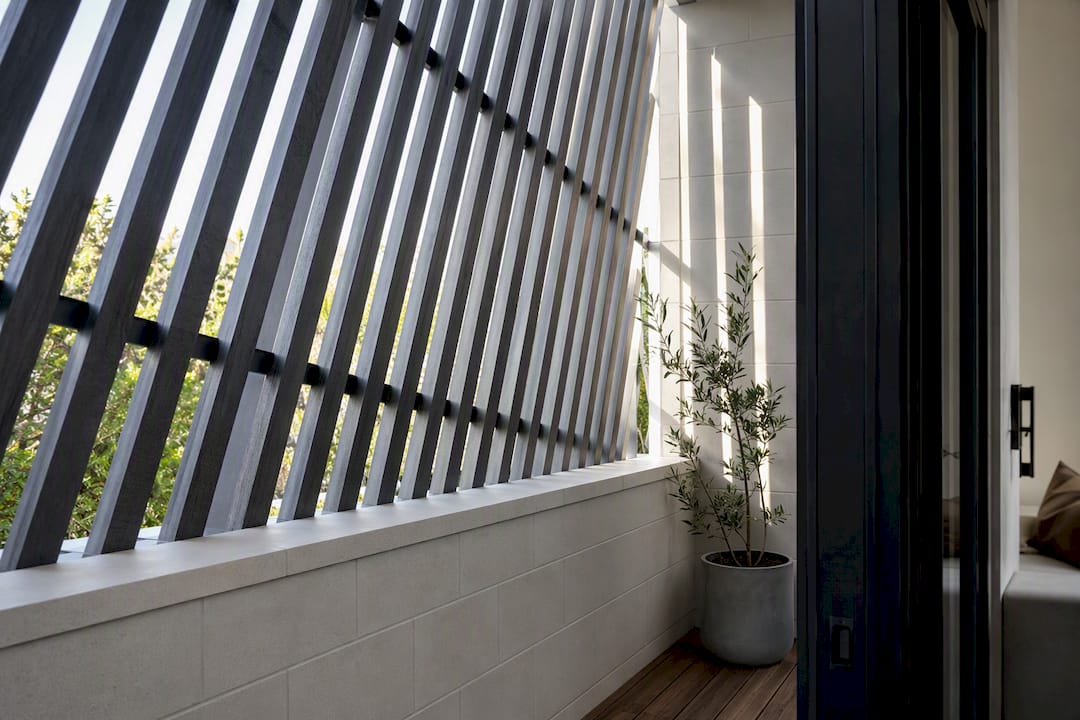
Angled or louvered panels are the workhorse for genuine privacy. Boards set on an angle block sightlines from footpath level while still allowing some light and airflow, making them popular in front-yard designs where a solid wall would feel too closed.
Board-on-board or shadowbox styles, often topped with a strip of lattice, give you a timber-look fence with no direct gaps at all, softened by the lattice band so it doesn't read as a barricade.
Mixed-material runs, such as masonry or stone piers spaced along a timber or metal infill, add visual rhythm and let you concentrate your budget on the parts that need to last.
A few quick pairings that tend to work:
- Brick veneer or rendered homes suit masonry piers with slatted infill.
- Weatherboard and timber facades pair naturally with horizontal or vertical timber slats.
- Glass-heavy modern builds look sharpest with slim aluminum louvers.
Materials: Pros, Cons, Longevity and Maintenance
Every material trades upfront cost against long-term upkeep, and privacy fencing amplifies that trade-off because more surface area means more exposure to sun and moisture.
- Timber is the most affordable entry point and offers the widest range of finishes, but it needs re-staining or sealing every two to three years and typically lasts 15 to 20 years depending on species and climate exposure.
- Composite costs more upfront than timber but holds its color and shape without staining, making it a strong pick for owners who want a timber look without the recurring maintenance.
- Vinyl needs almost no maintenance beyond occasional washing, though the style range is narrower and it can look less premium on a heritage-style home.
- Aluminum and steel are the standard choice for slim, modern slat and louver fences. Powder-coated aluminum resists corrosion well near the coast, while raw steel needs a protective finish to avoid rust streaks.
- Masonry and gabion elements make excellent bases or pillars for a mixed-material fence. They cost more per linear meter but add mass and permanence that lighter materials can't match.
How to Get Real Privacy When Front-Yard Height Is Limited
Councils rarely let you build a two-meter solid wall at the front boundary, so the privacy has to come from technique, not just height.
- Angle the slats. Boards set at roughly a 45 degree angle are effective at blocking street-level sightlines while still letting light and air move through the gaps.
- Layer with planting. Evergreen shrubs or columnar trees planted immediately behind a low fence add height that the fence itself isn't allowed to have, and they soften the hard edge of any timber or metal panel.
- Add a lattice or trellis topper. This is a common way to legally gain a bit more screened height above the solid section, and it doubles as a support structure for climbing plants.
- Use attached screens carefully. Porch-mounted privacy screens can extend the visual barrier, but check your local building rules before attaching anything structural to the house or an existing fence.
- Break up long runs. A single unbroken wall of slats reads as a fortress. Framed gates, a change in slat direction, or a planting pocket every few meters keeps the frontage feeling like part of a home rather than a boundary line.
Combining a legal-height fence with planting or lattice is a commonly recommended approach for getting practical privacy without triggering a permit for excess height.
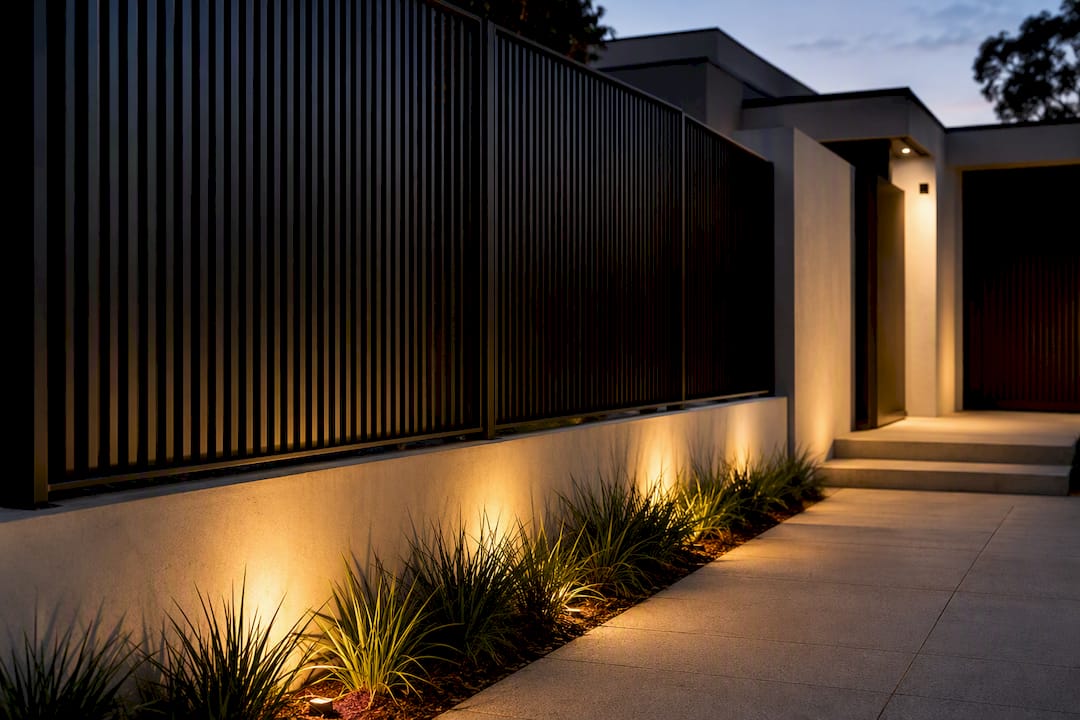
Pro Tip: Install landscape lighting along the base of a louvered fence. It reads as a design feature after dark and removes the "who's hiding back there" feeling that unlit tall screening can create for passersby.
Typical Costs and Realistic Maintenance Expectations
Installed pricing varies by region and site access, but rough bands hold across most markets. Industry cost roundups generally place timber as the cheapest upfront option, with vinyl and composite costing more to install but less to maintain over a ten-year span.
- Timber tends to sit at the lower end of the price range but carries recurring staining costs every two to three years.
- Vinyl and composite cost more per linear meter installed but need little beyond an occasional wash.
- Aluminum and steel slat fencing sits in the mid-to-upper range, with cost climbing for powder-coated finishes and heavier gauge material.
- Masonry piers or gabion bases add the most to a quote per linear meter but rarely need maintenance beyond periodic inspection.
Gates cost noticeably more than an equivalent run of fencing. Hinges, latches, and especially automation hardware, motors, sensors, keypads, add both material and labor cost that a plain fence section doesn't carry.
Budget planning tip: Set aside 15 to 20% extra for site-specific extras like sloped ground, extra footings, or unexpected utility relocations, since these are the most common reasons a front-fence quote runs over the original estimate.
Pre-Build Checklist: Permits, Property Lines and Utilities
Skipping this step is the single most expensive mistake homeowners make on a front-fence project, because pulling out a completed fence to satisfy a boundary or height dispute is far costlier than checking first.
- Confirm your local council's front-yard fence height and setback rules before you finalize a design; requirements differ by municipality and sometimes by street.
- Check whether a permit is triggered by your planned height, material, or proximity to a corner sightline. NSW Fair Trading and the Victorian Building Authority both publish guidance on this for their respective states.
- Get a property survey done, or confirm existing survey pegs, before you dig a single post hole. Building over an easement is a common and expensive mistake that a simple boundary check would have avoided.
- Arrange utility locates so footings and post holes don't land on buried services.
- If you're in an estate or under a covenant, check the design guidelines for restrictions on color, height, or material before you order anything.
- Hire a bespoke designer or installer when the site has slope, heritage constraints, or planned automation; a straightforward flat block with a simple timber run is often fine for a standard contractor.
Techniques for Enhancing Privacy Without Blocking Natural Light
The instinct to solve privacy with more solid material is usually the wrong move. Solid infill blocks the neighbor's view, but it also blocks your own window light and can make a north-facing courtyard feel dim for most of the day.
Louvered and angled slats solve this directly. Set at the right pitch, the gaps between boards still let daylight scatter through while denying a straight-line view from the footpath. Frosted or reeded glass panels do something similar on a smaller scale, useful for a side gate or a narrow gap beside a garage where full slats would feel heavy.
Planting solves it in a different way. A hedge or screen of columnar trees filters light rather than blocking it outright, since foliage moves and lets dappled sun through even at a density that fully obscures a direct view. Deciduous species add a seasonal bonus: denser screening in summer when the street is busiest, more light through in winter when you want it.
Positioning matters as much as material. A fence set slightly forward of a window, rather than directly against it, maintains a shadow gap that keeps the room from feeling boxed in even with a fairly solid screen. Pergolas or slatted roof extensions above a low fence can also carry the privacy line upward without adding another meter of solid boundary material, which keeps you inside typical council limits while still shielding an elevated sightline from a two-story home across the street.
How Fence Design Shapes Neighborhood Aesthetics and Neighbor Relations
A front fence is one of the few pieces of private property that everyone on the street sees every day, and design choices ripple outward more than most homeowners expect.
A tall, solid, unbroken fence can technically satisfy a privacy goal while making a street feel closed and unwelcoming. Streetscapes built around lower fences, mixed materials, and visible landscaping tend to read as more cohesive, and real estate agents will tell you that a fortress-style boundary can actually work against street appeal come sale time, even when it does the privacy job perfectly well.
Neighbor relations get affected in more direct ways too. A fence built hard against a shared boundary, or one that shadows a neighbor's garden bed, can create friction that has nothing to do with the fence's own design quality. Talking through a shared or adjoining fence project before building, rather than after, avoids most of these disputes. Matching the general height and material tone of neighboring fences, even with a different design detail, tends to keep a street looking coherent rather than making one property look like it's trying to wall itself off from the rest of the block.
Design moves that break up a long solid run, framed gates, planting pockets, a change in slat direction, do double duty here: they soften the fence's presence for anyone walking past and reduce the fortress effect that drives most neighbor complaints in the first place.
Security Considerations Related to Privacy Fencing
Privacy and security pull in slightly different directions, and a good front fence has to satisfy both without one undermining the other.
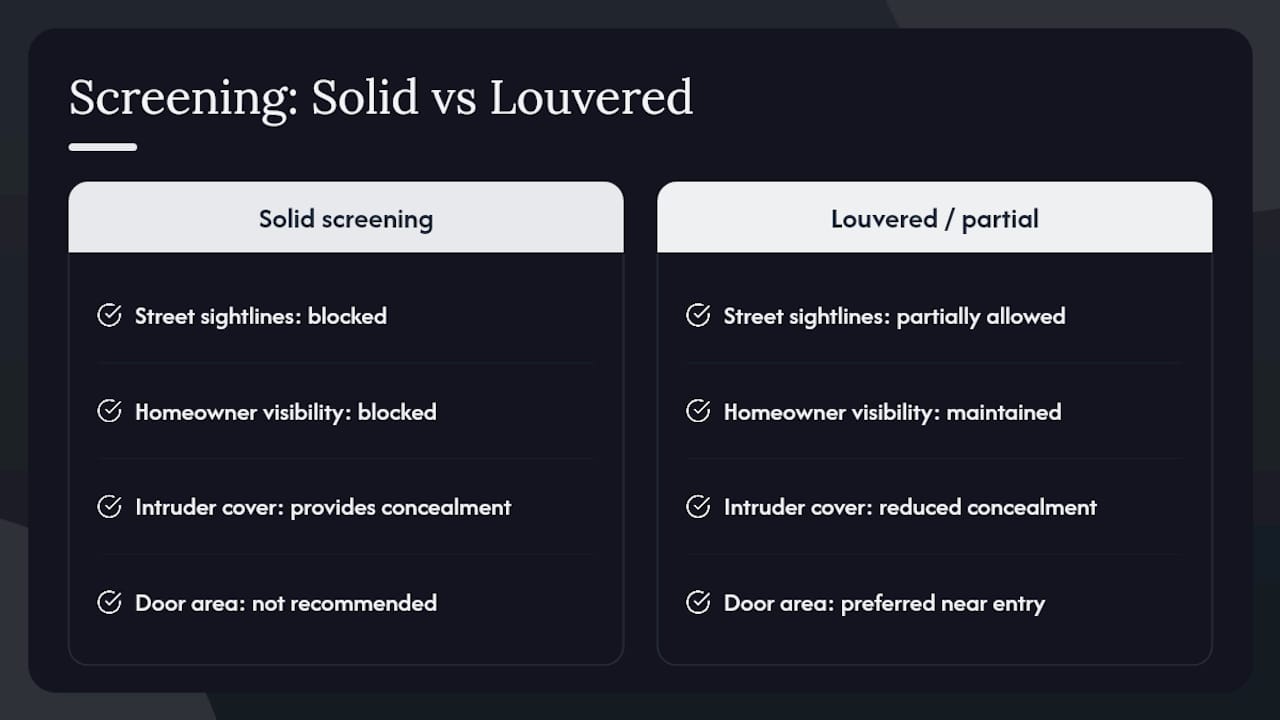
A fence that fully blocks sightlines from the street also blocks sightlines for anyone trying to watch the property, including the owners themselves. Fully solid, floor-to-top screening around an entry point can actually give an intruder cover to work unseen, which is why many security consultants favor partial screening, louvers or slats, over full solid panels near front doors and ground-floor windows.
Height matters differently for security than for privacy. A fence tall enough to block a view is not automatically tall enough to stop someone climbing over, and a fence built purely for climbing deterrence can end up taller than most councils allow at a front boundary anyway. The more reliable security layer tends to be the gate and its hardware: solid latching, and increasingly, integrated automation with sensors or keypad access, rather than raw fence height alone.
Lighting closes the gap that height and slats can't. A well-lit gate and fence line removes the shadowed cover that a solid fence can otherwise create, and it's one of the cheapest additions relative to the security benefit. For anyone integrating automated gates or access control into a new front fence, the security conversation is really about controlling who and what passes through the entry point, not about how opaque the fence panels are.
Environmental Considerations and Sustainability of Privacy Fence Materials
Material choice for a privacy fence carries an environmental cost that's easy to overlook next to price and appearance.
Timber is renewable when sourced from certified plantations, but softwood species treated with older chemical preservatives can leach into soil over time, and short-lived timber fences replaced every 15 years generate more waste over a few decades than a single longer-lived install. Composite decking and fencing typically blends recycled plastic with wood fiber, which diverts material from landfill, though composite itself is harder to recycle again at end of life than either raw timber or metal.
Vinyl fencing is PVC-based, durable and low maintenance, but it's a petroleum product that doesn't biodegrade and is rarely recycled in practice once removed. Aluminum and steel sit at the other end: both are highly recyclable, and a powder-coated aluminum fence can be melted down and reused almost indefinitely at the end of its service life, which partly offsets the higher embodied energy of producing the metal in the first place.
Masonry and stone elements carry a heavy upfront carbon cost in manufacturing and transport but essentially never need replacing, which spreads that cost over a very long service life. For homeowners weighing sustainability alongside privacy, the practical takeaway is that longevity often matters more than the raw material label. A fence that lasts 30 years with minimal upkeep can beat a "greener" material that needs replacing twice in the same period.
Designer Perspective: Balancing Privacy, Welcome and Resale
Proportion does more work than height ever will. A well-set gate, consistent pier spacing, and material choices that match the house give a fence real presence without looming over the street.
Bespoke design earns its cost on sloped blocks, corner properties with tricky sightlines, or anywhere automation needs to integrate cleanly into the gate rather than getting bolted on afterward. Soft lighting and planting around the base do the rest, taking the visual weight off the structure itself so the fence reads as part of the home, not a wall in front of it.
— Rhys
Gatecon: Bespoke Front Fences Built to Match Your Home, Not a Catalog
If your site has slope, tricky sightlines, or you want automation built into the gate itself rather than bolted on later, that's exactly where a custom approach beats an off-the-shelf fence package. Gatecon designs and installs architectural gates and designer fencing for homes across Melbourne, tailoring proportion, material, and slat angle to the specific house rather than fitting a standard panel run.
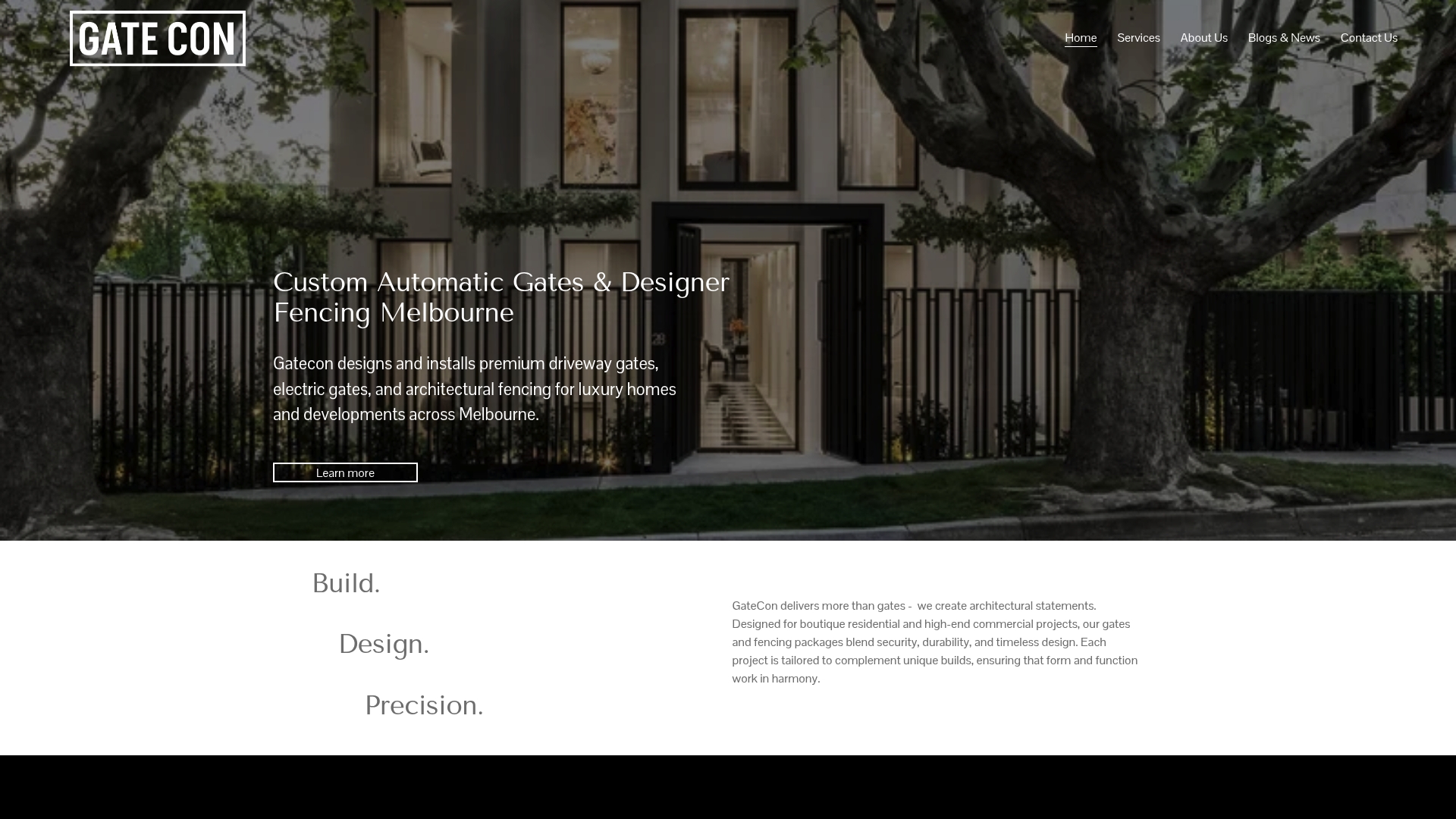
A typical engagement starts with a site visit to check sightlines, boundaries, and existing structures, followed by a concept design, a firm quote, and installation handled end to end. For properties that need both a privacy fence and a matching entry gate designed as one cohesive package, Gatecon's custom packages cover the full scope from concept through fabrication. If you're planning a front-yard project on a site with real design constraints, get in touch to start with a site visit and concept discussion.
Key Building Authorities and Practical Resources to Check
Before finalizing any front-fence design, check NSW Fair Trading, the Victorian Building Authority, or the Queensland Government building pages for your state, then confirm exact height and permit rules with your local council.
Sources
- Which type of fence should I choose for my garden? | Houzz Australia
- NSW Fair Trading
- Victorian Building Authority
- Queensland Government
- Front Fence Ideas for Security, Privacy and Street Appeal | Owner Inspections
FAQ
What Is the Cheapest Option for a Privacy Fence?
Timber is generally the cheapest upfront material for a privacy fence, though it needs re-staining every two to three years to hold its look. A low timber fence paired with dense planting behind it is often the most budget-friendly way to add privacy without needing a permit for extra height.
Can I Have a Fence at the Front of My House?
Yes, front-yard fences are allowed almost everywhere, but most councils cap the height of solid sections, commonly around one meter, with taller screening allowed only if it's see-through above that line. Check your specific council rules or NSW Fair Trading and equivalent state authorities before finalizing a design.
What Are Some Options for Front Fencing?
Common options include horizontal slat fences, angled or louvered panels, board-on-board with a lattice top, and mixed-material runs using masonry piers with timber or metal infill. The right choice depends on your home's architecture, your council's height limits, and how much upkeep you want to take on. For a custom design that blends several of these elements, a bespoke installer can tailor the combination to your site.
What Are Some Cheap Ways to Block My Neighbor's View?
Planting a dense evergreen hedge or a row of columnar trees behind a low, legal-height fence is one of the most affordable ways to gain privacy without triggering a permit for extra fence height. Adding a lattice topper to an existing fence is another low-cost option that also gives climbing plants something to grow on, and combining a legal-height fence with planting or lattice is a widely recommended approach for exactly this problem.