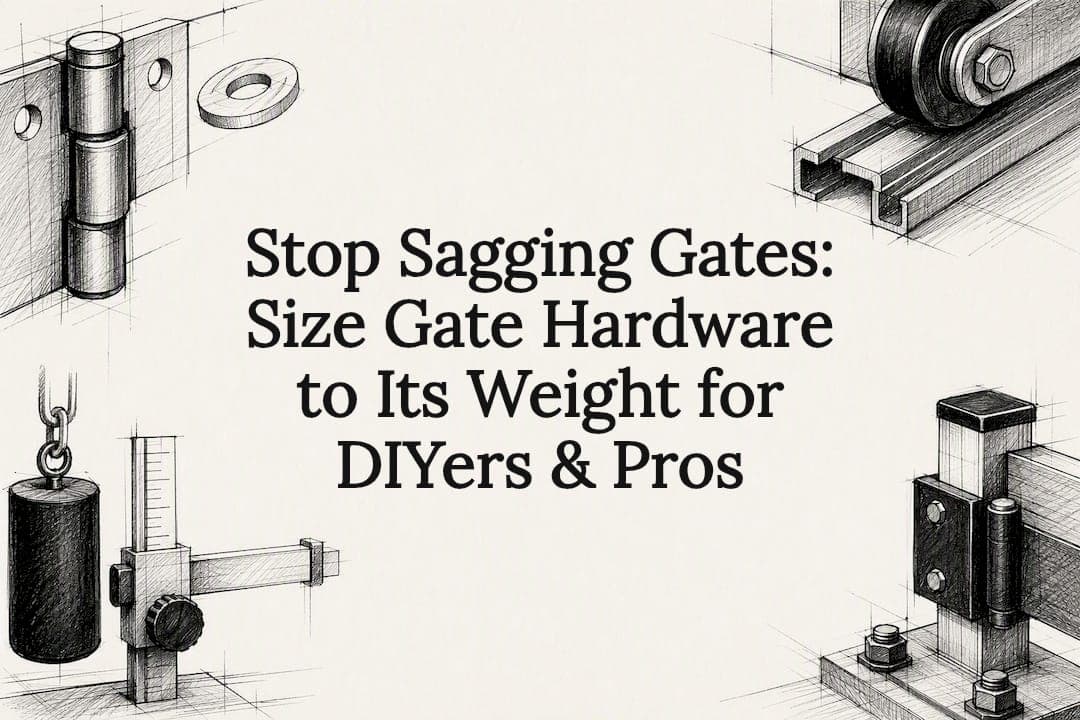
Match the hardware category to the gate before you shop for brands or finishes. Swing gates live or die on hinge capacity. Sliding gates depend on rollers, tracks, and guides. Cantilever gates need reinforced rollers and a longer track base. Pool gates require self-closing hinges and compliant latch placement, and any automated gate needs an operator sized to the leaf it's pushing. Measure the gate's weight and dimensions first; every other decision follows from that number.
TL;DR:
- Proper hardware sizing depends on accurately measuring the gate’s weight and dimensions, with a safety margin for stress from wind and impact.
- Swing gates require hinges rated for the full load, while sliding and cantilever gates need quality rollers, tracks, and guides rated for their specific weight.
- Pool gates must incorporate self-closing hinges and high-mounted, lockable latches to comply with safety standards and prevent child access.
- Automated gates should have a mechanically sound foundation, with operators matched to the gate’s duty cycle and safety sensors installed for pedestrian protection.
- Hardware selection is most effective when integrated into the gate’s design from the start, especially for heavy, automated, or safety-critical installations.
Table of Contents
- Gate Hardware Selection Guide: Matching Hardware to Gate Type
- How Do You Choose the Right Hinges for a Gate?
- What Latch and Safety Hardware Does a Gate Need?
- Which Rollers, Guides, and Tracks Suit a Sliding Gate?
- Which Materials and Finishes Hold Up Best Outdoors?
- How Do You Match an Automated Gate Operator to the Gate?
- What's the Step-by-Step Process for Selecting Gate Hardware?
- When Gate Hardware Selection Calls for a Professional
- Get Bespoke Gate Hardware Built Into the Design From the Start
- Sources
- FAQ
Gate Hardware Selection Guide: Matching Hardware to Gate Type
Every gate design has a weak point, and it's usually the hardware nobody thought to size correctly. A swing gate needs hinges rated for its full weight plus wind load, a latch positioned for easy one-hand operation, and often a drop rod or cane bolt to lock the stationary leaf on double-gate setups. Sliding gates skip hinges entirely in favor of rollers, a ground or cantilever track, and an upper guide to keep the panel from swaying. Cantilever gates avoid ground tracks altogether, which matters where snow, sand, or gravel would otherwise jam a track system. Hanging or overhead gates rely on trolley hardware and overhead rail rather than post-mounted hinges. Automated gates need all of the above plus an operator matched to the gate's cycle count and weight class.
The most common mismatch: homeowners buy decorative hinges rated for a light picket gate, then hang a solid timber or wrought iron leaf on them. The hinges sag within a season, the gate drags on the ground, and the latch stops aligning.
A few rules of thumb by type:
- Swing gates need hinge capacity first, latch placement second.
- Sliding gates need roller and track quality first, guide alignment second.
- Cantilever gates need a rigid internal frame and oversized rollers, since the whole gate cantilevers off two posts with no ground support.
- Automated gates need mechanical prep (hinges, posts, footings) finished before the operator goes in, not after.
How Do You Choose the Right Hinges for a Gate?
Weigh the gate, count the hinges, then apply a safety margin. That's the whole sizing method in one sentence, but the details matter.
Start by weighing the actual leaf, not an estimate. Divide that weight across the number of hinges you plan to use, then pick hardware rated well above that per-hinge load. Wind and slamming force add stress that a static weight figure doesn't capture, so undersizing by even one hinge class is a common and expensive mistake.
Hinge types vary by mounting and duty class:
- Butt hinges work for lightweight gates and low-traffic applications.
- Strap hinges spread load across a wider surface, good for wooden gates.
- Weld-on hinges offer a permanent, rigid connection to steel posts and are common on heavy commercial gates.
- Bolt-on hinges allow removal and adjustment, useful where a gate might need realignment later.
- Heavy-duty bearing hinges use brass or needle bearings to carry serious weight with minimal friction.
Real products illustrate the spread. The Gatemaster Superhinge line maps hinge size directly to maximum gate weight, with the SH16 rated up to 150 kg per pair, and it uses brass bearings and grease points to cut down wear over time. On the higher end, a 7" heavy-duty hinge set rated up to 1,100 lb per set uses needle-bearing barrels and grease fittings, available in bolt-on or weld-on configurations for large steel or wrought iron leaves. If you want a self-closing hinge instead of a standard pivot, the Waterson self-closing hinge family offers both mechanical and hydraulic closing action with adjustable spring tension.
Mounting matters as much as the hinge itself. Weld-on hinges suit steel posts and heavy leaves where you never plan to remove the gate. Bolt-on hinges work better for timber posts or situations where future adjustment is likely. For any leaf over roughly 200 lb, look for a double-shear pin design and confirm the post is set in concrete rather than just backfilled dirt. A hinge is only as strong as the post holding it, and a wobbly post will eventually shear even the best hinge hardware.
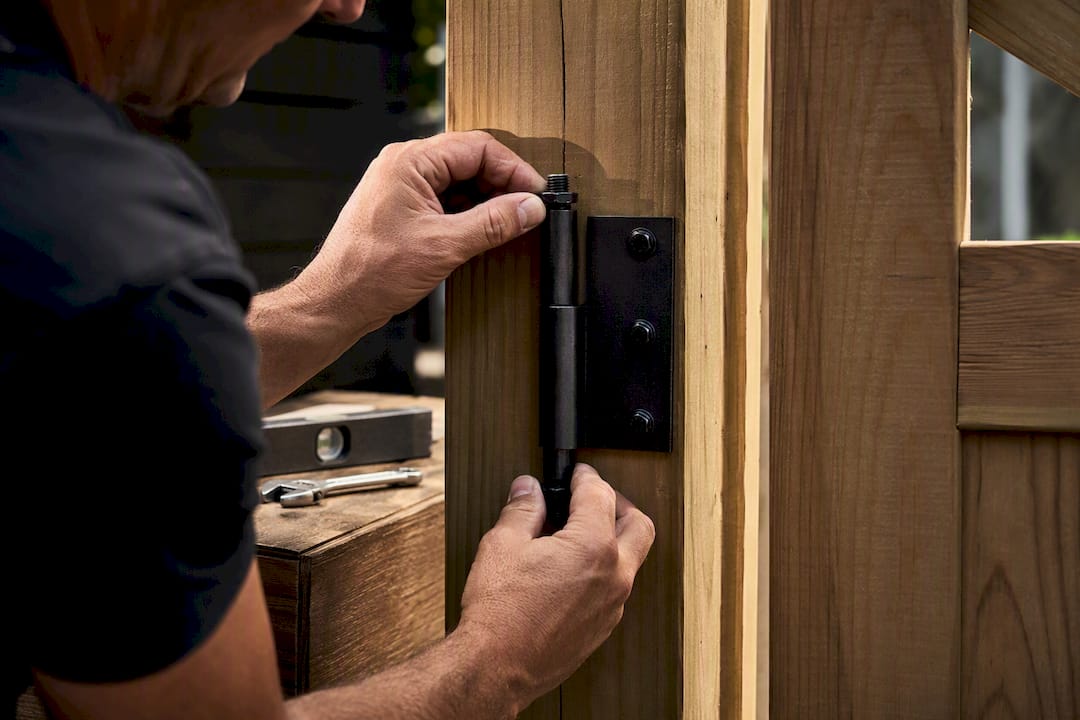
Pro Tip: Check that both hinges share the exact same pin axis before you tighten anything down. A hinge post that's even slightly out of plumb will bind the gate and wear the top hinge twice as fast as the bottom one.
Look for grease zerks and brass or bronze bearings on any hinge carrying real weight. These features cut friction and extend service life substantially compared to a plain steel pin bushing, and they're a small cost difference for a part that's expensive to replace once it's welded in place. Shear-off security nuts are worth seeking out too. They let you tighten a bolt-on hinge to full torque, then snap off the head so the fastener can't be removed from outside the property.
What Latch and Safety Hardware Does a Gate Need?
Pick the latch type based on who needs access and how, then layer in safety hardware if the gate protects a pool or restricted area.
- Gravity latches drop into place automatically and suit low-security applications like garden gates.
- Bolt or traverse latches offer a manual throw for a more secure closure on driveway or side gates.
- Lockable latches accept a padlock or keyed cylinder and work well anywhere you need controlled access.
- Magnetic and pool-specific latches self-engage and typically mount high on the gate, out of a small child's reach.
- Electric strikes integrate with intercoms or keypads for automated or remote-controlled access.
Pool gates carry the strictest requirements. Pair a self-closing hinge with a latch mounted well above typical reach height, and avoid any hold-open mechanism that could defeat the self-closing action. The Waterson self-closing hinge family builds in adjustable closing-force control, which matters for compliance with accessibility standards while still ensuring the gate swings shut reliably. If the gate also needs remote or keyed access, choose a latch body compatible with an electric strike or keypad add-on rather than retrofitting one later.
Which Rollers, Guides, and Tracks Suit a Sliding Gate?
Sliding gate performance comes down to three components working together: rollers, the track they ride on, and an upper guide that keeps the panel from swinging outward.
Ground-track sliding gates run on a track set into a concrete footing, which works well on level, debris-free driveways. Cantilever gates skip the ground track entirely, supporting the leaf on internal rollers that ride along the bottom rail of the gate frame itself. Cantilever systems are the better choice where snow, sand, or loose gravel would otherwise clog a ground track and jam the gate mid slide.
Selection criteria for rollers and tracks:
- Match roller load rating to actual gate weight, not an average estimate.
- V-groove tracks self-center the roller and shed debris better than flat tracks.
- Nylon or UHMW rollers run quieter; steel rollers with bearings handle heavier loads.
- Upper guides on framed sliding gates need periodic lubrication and alignment checks, since poor track alignment or debris buildup is the most common cause of a sliding gate binding or derailing.
Pro Tip: If your driveway floods, freezes, or collects leaves in autumn, a cantilever design will save you far more maintenance headaches than a ground track ever will.
Which Materials and Finishes Hold Up Best Outdoors?
Corrosion resistance depends on climate exposure more than budget. Coastal properties with salt air need 316 stainless steel hardware, which resists pitting corrosion far better than standard 304 stainless or plated steel. Inland properties without salt exposure can usually get by with hot-dip galvanized steel at a lower cost, especially for structural components buried in concrete or hidden behind cladding.
- 316 stainless steel: best for coastal or high-humidity environments, higher upfront cost.
- Hot-dip galvanized steel: solid mid-range option for inland properties, less expensive than stainless.
- Powder coating: more durable than wet paint, resists chipping and UV fade better over years of sun exposure.
- Wet paint finishes: lowest cost but need more frequent touch-ups, especially on high-contact areas like latches.
Surface prep matters more than the coating itself. A powder coat applied over poorly cleaned steel will bubble and peel within a year or two regardless of how good the coating is rated. Plan on inspecting hinges, latches, and rollers twice a year, more often near the coast, checking for surface rust, loose fasteners, and worn bearing surfaces before they turn into a stuck or sagging gate. For a deeper look at pairing finishes with architectural styles, this guide to luxury fencing materials covers the aesthetic side of that decision.
How Do You Match an Automated Gate Operator to the Gate?
Pick the operator class based on cycle count and duty, not just gate weight. A residential driveway gate opening a dozen times a day has very different requirements than a commercial gate cycling hundreds of times.
Mechanical prep comes before motor selection. Hinge and post engineering is the single most common root cause of gate operator failure, and an operator installed on a well-hung, rigidly posted gate will outlast one bolted to a wobbly frame by years. For heavy leaves, offloading some weight onto a wheel at the latch end reduces stress on both the hinge post and the operator, though that wheel assembly then needs its own maintenance schedule.
- Match operator type (DC, AC, hydraulic, or brushless DC) to your duty cycle and power availability.
- DC operators with current-sensing simplify obstacle detection and pair well with battery backup for residential automation.
- Require photoeyes and a safety edge on any automated gate, non-negotiable for pedestrian safety.
- Solar power suits remote sites without reliable grid access; AC suits high-cycle commercial use.
Hire a professional installer once you're dealing with a heavy leaf, a pool safety gate, or any automation project involving buried wiring and safety sensor calibration. The mechanical margin for error shrinks fast once a motor is pushing hundreds of pounds of steel.
What's the Step-by-Step Process for Selecting Gate Hardware?
Measure before you buy anything. Get the actual gate weight, leaf dimensions, post size, and footing depth on paper first.
- Confirm gate type: swing, slide, cantilever, or hanging.
- Choose the frame material and finish suited to your climate.
- Select hinge or roller class based on measured weight, not guesswork.
- Pick a latch that matches your access needs and any pool-safety requirements.
- Add motion hardware: tracks, guides, or drop rods as the design requires.
- Confirm operator compatibility if the gate will be automated.
- Ask suppliers for load ratings in writing, not just marketing claims.
Pro Tip: Ask any installer or supplier what happens if the hardware fails within the first year. A vague answer on warranty coverage is a bigger red flag than a slightly higher price tag.
When Gate Hardware Selection Calls for a Professional
Simple picket gates and light garden gates are reasonable DIY projects for anyone comfortable with a drill and a level. Heavy leaves, pool safety gates, and anything involving automation cross into professional territory fast, since a miscalculated hinge or a poorly wired safety sensor creates real liability, not just an inconvenience.
— Rhys
Get Bespoke Gate Hardware Built Into the Design From the Start
Hardware selection happens as part of the design process, not as an afterthought bolted onto a finished gate. Choosing generic hinges, rollers, or latches after the fact often forces compromises on weight distribution, finish consistency, or automation compatibility that a purpose-built system avoids entirely.
A gate built around properly specified hardware from the start protects your investment in automation, finishes, and structural posts for decades, not just the first few seasons. If you're weighing a new driveway gate or upgrading an existing entry, get a sense of the process and options through Gatecon's Melbourne service areas and request a consultation to see what a tailored design and installation plan looks like for your property.
Sources
For deeper technical specifications, review the Gatemaster Superhinge product line for weight-rated hinge sizing, the Waterson self-closing hinge family for pool-safety hinge options, and the gate operator selection guide for operator class and mechanical prep details. This interior door hardware buying guide also offers useful background on general hardware selection principles that carry over to gates.
- The industrial heavy-duty gate hinge | Gatemaster Locks
- 7” Heavy Duty Gate Hinges – 1,100 lb Capacity, Bolt-On or Weld-On
- Gate Operator Selection Guide: Hinge, Motor, UL 325 – Industrial Monitor Direct
- Waterson self-closing hinge product family
FAQ
How Do I Choose the Right Gate Hardware?
Start by weighing the gate and confirming its type, then size hinges or rollers to that weight with a safety margin before selecting a latch or operator.
What Are Common Problems With Gate Hinges?
Sagging from undersized hinge capacity, misaligned pin axes that bind the gate, and worn bearings from a lack of grease points are the three most frequent hinge failures.
What Are the Different Types of Gate Hardware?
The core categories are hinges, latches, rollers and tracks for sliding gates, drop rods or cane bolts for double gates, and operators for automated systems.
What Hardware Do I Need for a Basic Gate?
A swing gate needs hinges rated for its weight and a latch; a sliding gate needs rollers, a track, and an upper guide instead of hinges.
Do Pool Gates Need Special Hardware?
Yes. Pool gates need self-closing hinges paired with a latch mounted out of a child's reach, with no hold-open mechanism that could defeat the automatic closing action.