For most Melbourne frontages, architectural aluminium slat fencing works best on modern homes, Colorbond or rendered masonry suits sites that need full privacy, and timber picket still reads correctly on period Victorian and Edwardian houses. Pair a low street-facing section with a taller privacy run near your entry. Before you commit to a height or style, check your council's fence rules, and if the project calls for a custom look, book a design consult with a fencing specialist like Gatecon.
TL;DR:
- Council rules must be verified first, especially for fences over 1.2 meters, heritage overlays, or sight line restrictions near driveways.
- Aluminium slats require minimal maintenance and resist Melbourne's coastal and UV exposure better than timber or steel.
- Full privacy is best achieved with Colorbond or rendered masonry, especially on corner blocks or busier roads where wind and noise are concerns.
- Mixed-height fences balance visibility and privacy, with lower boundary fencing and taller entry panels suited for Melbourne inner suburbs.
- Coordinating gates and fencing in material and finish enhances visual cohesion and function, particularly on sloped or narrow driveways.
Table of Contents
- Front Fence Ideas Melbourne Homeowners Actually Use
- How to Choose the Right Front Fence for Your Melbourne Property
- Materials and Durability: What Performs Best in Melbourne's Climate
- Coordinating Gates and Driveway Entries With Your Fence
- Planning, Approvals and What to Expect During Installation
- Recommendations for Local Suppliers and Contractors Specializing in Melbourne Front Fences
- Front Fences That Fit Melbourne's Different Neighborhoods
- Sustainable and Eco-Friendly Fencing Options for Melbourne
- Gatecon's Take on Getting a Melbourne Frontage Right
- How Gatecon Helps: Bespoke Fencing and Gate Solutions in Melbourne
- Sources
Front Fence Ideas Melbourne Homeowners Actually Use
Walk down any street in Brighton, Hawthorn East, or Malvern East and you'll see the same handful of fence types repeating, just in different finishes. That's not a lack of imagination. It's because a small set of styles solves the real problems Melbourne blocks present: exposed westerly aspects, narrow setbacks, heritage overlays, and a strong local preference for a frontage that still shows off the house behind it.
Picket and timber variations remain the default for weatherboard cottages and Victorian terraces in suburbs like Yarra City and Essendon. A painted timber picket fence at a typical height keeps the garden visible from the street and matches heritage character, though it needs repainting periodically and isn't immune to rot at ground contact points.
Horizontal slats, whether in timber or composite, give a warmer, more textured look than flat panels while still reading as contemporary. They work particularly well on renovated period homes in Richmond and Armadale where owners want a modern edge without clashing with an older facade.
Architectural aluminium batten or slat systems have become the go-to for new-build and renovated homes across the Eastern Suburbs. Aluminium resists rust, holds a crisp, uniform line, and barely needs maintenance beyond an occasional wash, which matters on a Melbourne property where nobody wants a weekend fence-sanding ritual.
Colorbond steel or rendered masonry delivers full privacy and stands up to wind exposure, making it the practical pick for corner blocks or homes on busier roads near Port Melbourne and West Melbourne. It's heavier and more expensive to install than slats, but you're buying acoustic buffering and complete screening in return.
Mixed-height runs solve the tension between wanting street presence and wanting privacy. A lower fence along the boundary with taller panels flanking the entry keeps the garden visible from the footpath while still giving you a private pocket near the front door.
Garden-screen fences and decorative metalwork soften a frontage where a full fence would feel heavy. Powder-coated steel scrollwork or a low aluminium screen backed by planting reads elegant on a Toorak or Bayside property without blocking the view of a well-kept garden.
A few practical notes worth pinning to your shortlist:
- Picket suits heritage streets but demands the most upkeep of any option.
- Horizontal timber slats bridge old and new without looking out of place on either.
- Aluminium battens give the lowest long-term maintenance for a modern look.
- Colorbond and masonry are the strongest options where privacy or noise is the priority.
- Mixed-height runs are the best compromise when you can't decide between open and private.
- Decorative metalwork and garden screens suit heritage-sensitive streets that ban solid fencing outright.
How to Choose the Right Front Fence for Your Melbourne Property
Before you fall in love with a style on Pinterest, work through this in order. Skipping the council check is the single most common mistake homeowners make, and it's the one that costs the most to fix after the fact.
- Decide your priority first. Curb appeal, privacy, keeping kids or pets contained, or genuine security each point to a different fence height and material, so pick one before you shop finishes.
- Check your council's fence rules. Height limits, front setback requirements, and heritage overlays vary by municipality and by street, so confirm what's allowed before you lock in a design.
- Match the material to your site's exposure. A wind-exposed corner block near the bay needs a different spec than a sheltered inner-city courtyard.
- Get quotes and ask the right questions. Push contractors on expected timeline, what site prep or drainage work is included, whether the finish carries a warranty, and how the gate will be coordinated with the fence.
- Confirm whether you need a permit. As a general rule, front fences over 1.2 meters, anything on a heritage-overlay property, or fences that affect sight lines near a driveway typically require sign-off from your local council before work starts.
Pro Tip: Photograph your existing frontage and street from a few angles before your first quote meeting. A designer can spot proportion and sight-line issues from photos that are much harder to explain over the phone.
Materials and Durability: What Performs Best in Melbourne's Climate
Melbourne throws four seasons at a fence in a single week, and that's before you factor in salt air near Port Melbourne or Brighton. Material choice decides whether you're touching up paint every spring or forgetting the fence exists for a decade.
- Aluminium resists corrosion, holds its color under UV exposure, and needs little beyond an occasional hose-down when it's powder-coated correctly.
- Colorbond steel offers strong durability and full privacy, though coastal-adjacent properties should ask for marine-grade or coastal-rated coatings to avoid premature corrosion.
- Treated timber and hardwood bring warmth and natural character but demand more upkeep, including checks for termite activity and rot at ground level.
- Composite and engineered infills mimic the look of timber slats with far less maintenance, a solid middle ground for busy households.
Australian manufacturers specifically market powder-coating over primer with marine-grade aluminium as protection against local sun and coastal exposure, which is a detail worth asking about directly when comparing quotes. Darker finishes absorb more heat and can fade faster under direct western sun, so if your fence faces west, ask your installer about UV-stable pigments before you settle on a color.
Coordinating Gates and Driveway Entries With Your Fence
Your gate is the first thing anyone touches, literally, and a fence that looks sharp next to a mismatched or poorly running gate undercuts the whole frontage. A few decisions here matter more than most homeowners expect.
- Sliding gates suit narrow or sloped driveways common across the Eastern Suburbs, since they don't need clearance to swing.
- Swing gates work well on wider, flatter blocks and often look more traditional against a period facade.
- Match material and finish between fence and gate. Consistency in color and rhythm reads as designed, even when the panel shapes differ slightly.
- Automation needs power and safety sensors, and any electric gate installation should meet local electrical compliance standards.
- At handover, check for smooth, quiet operation, secure hardware, and a finish that matches the rest of the run without visible touch-up marks.
Deciding between sliding and swing mechanisms early saves you from redesigning the fence layout later.
Planning, Approvals and What to Expect During Installation
A bespoke fence and gate project in Melbourne typically runs through a handful of predictable stages, though the timeline stretches depending on permit requirements and site complexity.
- Design and site assessment, where measurements, soil conditions, and existing services get checked.
- Permit lodgment if required, particularly for heights over 1.2 meters, heritage overlays, or driveway sight-line concerns, which your local council can confirm.
- Fabrication, often several weeks for custom aluminium or steel work.
- Installation, watching for underground services, boundary line disputes, drainage, and any vegetation that needs clearing first.
- Final walkthrough, confirming finish quality, gate operation, and warranty paperwork before sign-off.
Recommendations for Local Suppliers and Contractors Specializing in Melbourne Front Fences
Not every fencing business is set up for the kind of frontage most Melbourne homeowners are chasing right now. A standard fencing contractor can install a straightforward paling fence competently, but a bespoke aluminium slat run with a matching automated gate calls for a business that designs and fabricates rather than just assembles off-the-shelf panels.
Look for a contractor who handles design, fabrication, and installation under one roof, since that usually means tighter coordination between the fence style and gate finish. Ask to see completed projects in your suburb or a similar one, not just a generic photo gallery. A contractor familiar with heritage-overlay requirements in suburbs like Malvern East or Armadale will also save you time navigating council paperwork, because they'll already know which questions the planning department is going to ask.
Gatecon works across boutique residential and commercial projects throughout Melbourne, including the CBD, Bayside, and Eastern Suburbs, with a focus on custom design rather than pre-made catalog fencing. That approach suits homeowners who want the fence and gate treated as one cohesive design decision rather than two separate purchases. If your project involves automation, security integration, or a finish that needs to match a specific architectural style, a design-led installer is worth the extra conversation up front, even if a generic fencing crew quotes faster.
Front Fences That Fit Melbourne's Different Neighborhoods
Style compatibility isn't just about taste. A fence that looks sharp in a design photo can look wrong on the wrong street, and Melbourne's suburbs each carry their own visual logic.
In heritage pockets of Hawthorn East and Armadale, timber picket and low wrought-iron style fencing still dominate for good reason. These streets carry heritage overlays, and a solid modern panel fence would clash with the streetscape and likely fail a permit application anyway. Painted timber at picket height keeps the garden visible and respects the architectural rhythm of the block.
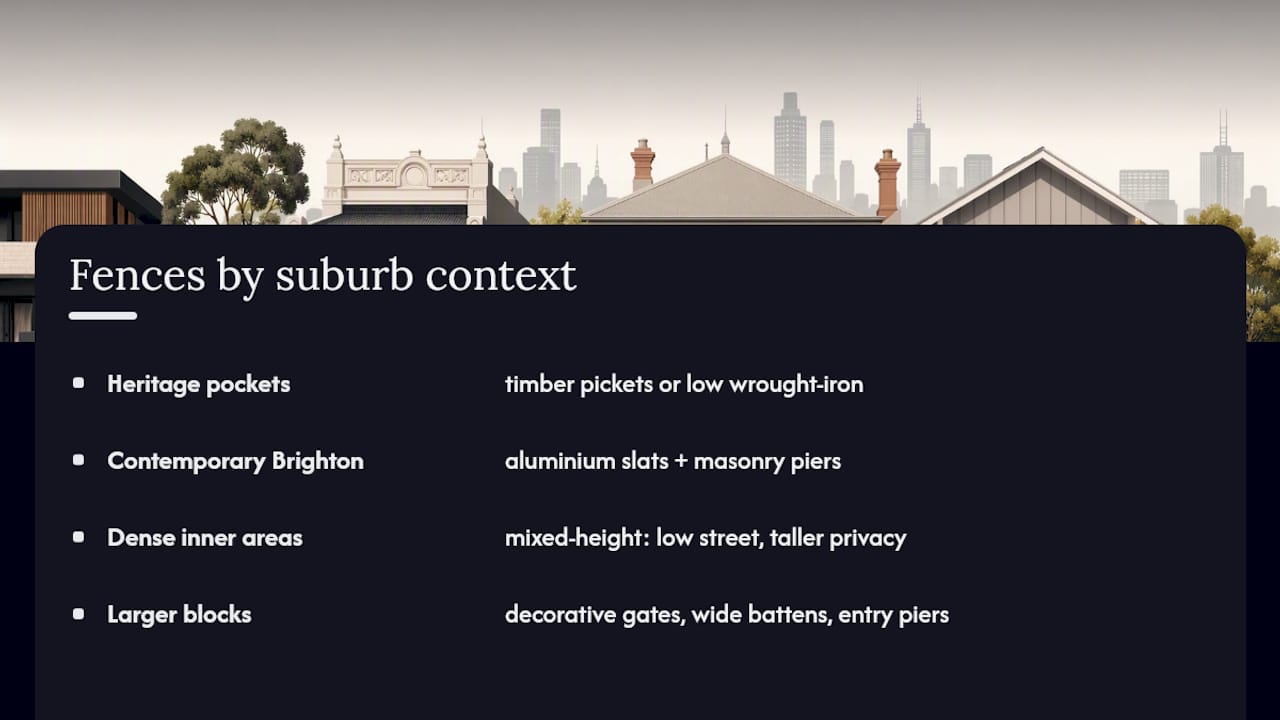
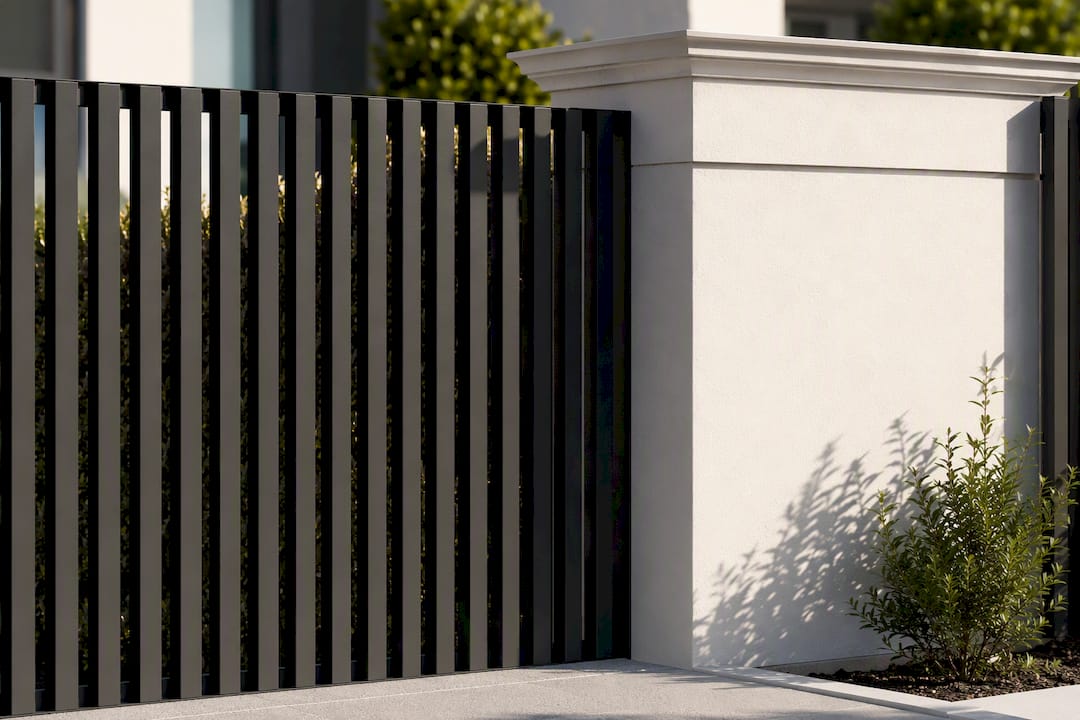
Along Brighton's more contemporary strips, aluminium slat fencing paired with rendered masonry piers has become common on rebuilt or renovated homes. The clean lines complement newer facades without looking sterile, and the low-maintenance finish suits owners who want a polished frontage without regular upkeep.
In denser inner areas like Richmond and West Melbourne, where blocks sit closer to the footpath, mixed-height fencing does the heaviest lifting. A modest street-facing section keeps sight lines open near the driveway, while a taller privacy panel near the entry gives the household a genuine buffer from foot traffic just a few meters away.
Around Essendon and Toorak, larger blocks allow for more architectural statements, decorative metal gates, wider aluminium battens, and masonry entry piers that treat the fence as an extension of the house's facade rather than an afterthought.
Sustainable and Eco-Friendly Fencing Options for Melbourne
Sustainability in fencing usually comes down to two things: how long the material lasts before it needs replacing, and how much energy or chemical treatment went into keeping it that way. Judged on those terms, aluminium slat systems perform well. They resist corrosion without repeated chemical treatments, and their long service life means less material heading to landfill over a couple of decades compared with timber that needs regular repainting or eventual replacement.
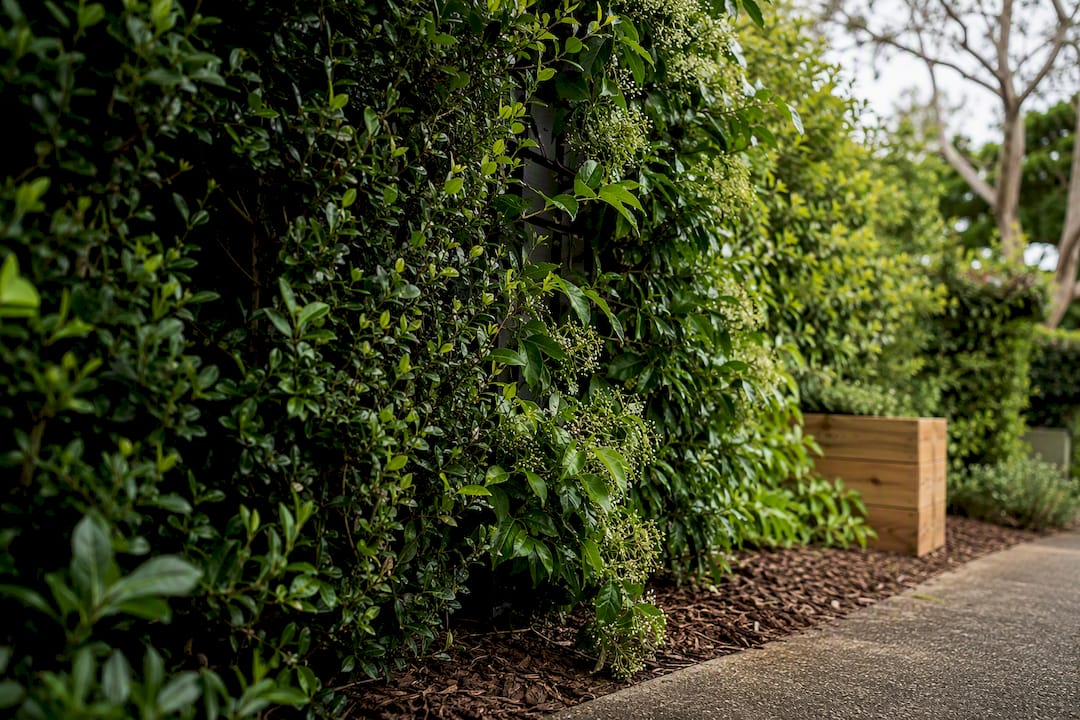
Composite infills made from recycled content offer another route, giving you a timber-like look without harvesting new hardwood or applying ongoing chemical treatments. For homeowners who want a garden-forward frontage, screen fencing paired with dense planting reduces the amount of manufactured material used at all, letting hedging or climbing plants do part of the screening job.
Responsibly sourced hardwood, treated without heavy chemical loads, remains a reasonable choice if you want a genuinely renewable material and don't mind the maintenance schedule that comes with it. Whichever direction you choose, a universal post system that accepts multiple infill types lets you adjust privacy levels along a single run without replacing the whole structure later, which extends the useful life of the fence as your needs change.
Gatecon's Take on Getting a Melbourne Frontage Right
The biggest mistake homeowners make isn't picking the wrong material, it's treating the fence as separate from the house. Matching architectural style and finish longevity from the start avoids expensive do-overs. If your project needs that kind of precision, request a design consult or site visit.
— Rhys
How Gatecon Helps: Bespoke Fencing and Gate Solutions in Melbourne
There are alternatives to piecing together a fencing contractor and a separate gate installer for your Melbourne frontage; some companies offer a single design team that handles both from concept through fabrication and installation, so the finish, proportions, and automation all match without a second contractor guessing at what the first one built.
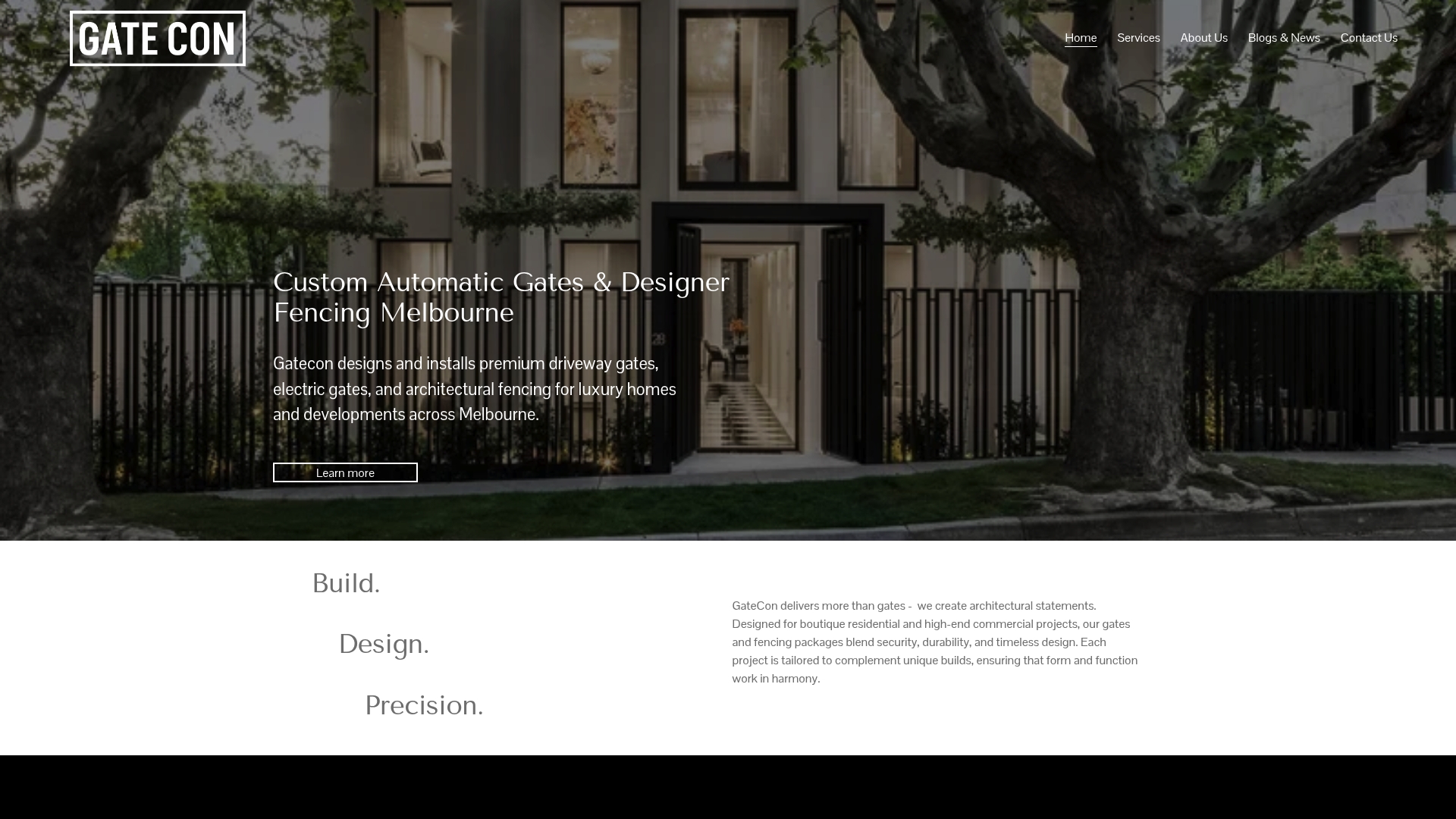
Services can include custom fence and gate design, precision fabrication, automation integration, and full installation for residential and boutique commercial projects. That's a meaningful difference from buying an off-the-shelf panel system and hoping the gate supplier's finish happens to match. Gatecon works across Melbourne's Eastern Suburbs, Bayside, CBD, and inner suburbs, and its luxury fencing portfolio shows how design choices get adapted to different architectural styles, from period terraces to contemporary rebuilds.
If you're ready to move past browsing styles and want a frontage designed specifically around your home, get in touch through Gatecon's Melbourne service area page to arrange a site visit or request a design quote.
Sources
- Modern front yard fence ideas: architectural aluminum designs
- Front Fence Ideas | Modern Batten & Blade | ToughGuard
- 34 front yard fence ideas and tips from our design team | Yardzen